
Educating for Tomorrow
Where Student-Centered Success and Academic Excellence Converge
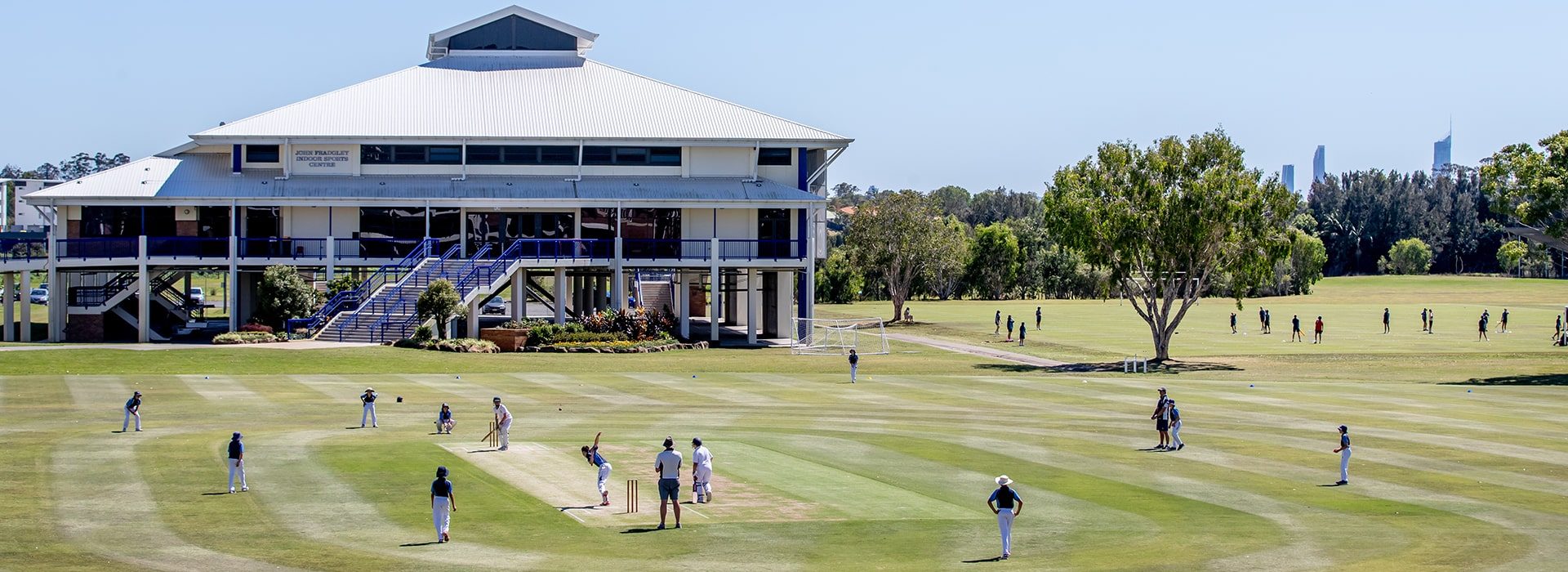
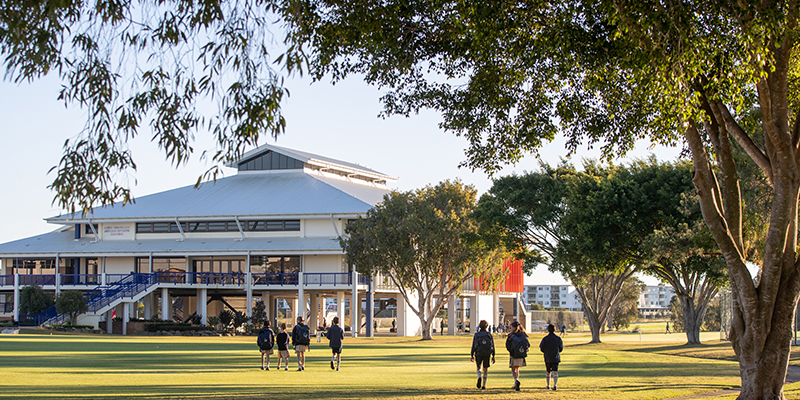
On a rapidly growing Gold Coast, where towers push higher and suburbs sprawl outward, All Saints stands in quiet contrast. Spread across one hundred green, leafy acres, the school feels more like a botanical park than a campus, with line-of-sight to the buildings of Broadbeach and Surfers Paradise but a distinctly calm, grounded atmosphere. It is a rare pocket of space and serenity in what is arguably one of the fastest-growing regions in Australia.
That physical setting is more than just a backdrop. For All Saints, a coeducational Anglican school now approaching its 40th anniversary, the campus reflects its broader ambition: to give young people room to grow, to think, to move, and to become “good humans ready for the world.”
Principal Matt Corbett, who joined the school in January 2025 and also chose All Saints as the place for his own children, describes it as a genuinely happy place. There are approximately 1,900 students enrolled, including around 120 international students, supported by nearly 300 staff. As the school prepares to celebrate its 40th year, a growing number of current families are second-generation, with parents who once walked the same grounds now watching their own children follow in their footsteps. The alumni base is rising, and with it, a deepening sense of community continuity and pride.
What is striking, however, is what All Saints does not do. It does not heavily market itself. Any communication or content on social media is aimed almost exclusively at existing parents and alumni, not external recruitment. And yet its wait lists are among the strongest in South East Queensland. Corbett sees that as the clearest proof of what truly defines the school: reputation, culture, and character.
When asked about the school’s reputation, Mr Corbett is quick to downplay his own perspective. “What matters most is what I hear from our families,” he says. “Parents talk about the growth of their children’s character, the genuine care and support they experience, and the sense of fun that runs through the school.” This is not an exam factory. Academic outcomes are a by-product of the environment we create. When wellbeing, joy, connection, and high-quality teaching come first, strong results follow naturally.”
His own children, who started at All Saints this year, settled within weeks. ” “They are thriving,” he says. “They feel comfortable, supported and happy.” He suspects that is how most students feel when they arrive.
Three Sub-Schools, One All Saints
All Saints is structured into three distinct sub-schools: Junior, Middle, and Senior, each designed to support students at different stages of their development. While each sub school has a tailored approach to learning, they all sit firmly within a shared culture, ethos and set of values.
The school follows the Australian Curriculum but, as an independent school, has the flexibility to shape how learning is delivered. This autonomy has given rise to several innovations that are now central to its model.
In the Junior School, which runs from Pre Prep through to Year 6, the school has invested in something that Corbett describes as both distinctive and transformational: an extra teacher in each year level. That means two teachers operating in partnership across the cohort and often working together in the same learning spaces. For students, the impact is immediate and tangible. The response time when a hand goes up is faster. Feedback is more frequent. Differentiation for a wide variety of learning needs happens more naturally and consistently.
“In schools today, we’re much better at understanding and recognising learning needs,” Corbett explains. “Having two teachers in the room allows us to meet those needs effectively. It is a significant investment, and we know not every school can do it, but for us it has been incredibly powerful.”
There is also a strong professional dimension. Teachers share planning, debrief lessons together, and hold one another to a high standard. Corbett sees it as a form of live, embedded professional learning that continuously sharpens practice.
The Middle School, spanning Years 7 to 9, is designed to address that critical period of early adolescence with a deliberate focus on continuity of relationships and deep understanding of learners. Rather than spreading staff across many year levels, All Saints assigns teachers to a specific year group and streamlines core subject teaching. A Year 7 student, for example, will have the same teacher for mathematics and science, and another for English and humanities. That teacher does not simultaneously teach Year 9 or Year 12; they specialise in that particular age group.
“If you’re teaching Year 7, Year 9, and Year 12, a lot of your energy goes to Year 12,” Corbett notes. “But if you are dedicated to a single year group, you come to know those learners incredibly well—both in terms of their wellbeing and their academic needs. Our teachers in Middle School are true specialists in the developmental stage they serve.”
In the Senior School, All Saints leans into breadth and flexibility. The school currently offers more than forty distinct pathways, reflecting its commitment to honouring the varied strengths, passions, and ambitions of its students. Whether a young person is drawn toward the trades, engineering, multimedia, fashion, or more traditional academic routes, the school’s approach is to “throw every opportunity at them” and then work backwards to create a bespoke pathway. It is, in Corbett’s view, one of the most special features of All Saints.
“When a young person arrives, we don’t narrow their options,” he says. “We open them up. As their strengths and identity develop, we work with them to build a pathway that makes sense. That might mean a VET course, high-level academic study, or something hybrid and more creative. Our job is to try and say yes. If it matters to them, it matters to us.”
Facilities with Depth, Not Flash
Physically, All Saints is striking not because of a single showpiece structure but because of the consistency and quality of its built environment. When the school opened in 1987, it benefited from guarantors and seed funding that allowed it to construct facilities of a high standard from the outset. Those buildings, carefully maintained and incrementally improved, still feel contemporary.
“Our approach has not been to chase ‘sugar-hit’ buildings,” Corbett explains. “Instead, we have taken a considered, strategic path of upkeep and improvement.” The school is debt-free, which gives it enviable stability and flexibility in planning future projects.
Across the campus, there is an impressive array of resources: a theatre that seats over 500 people, two 25-metre swimming pools, two full-sized sport centres, a fully equipped gym, an abundance of playing fields and outdoor spaces, and an exceptional music building. Boarding for international students is also a key part of the offering, with two boarding houses including a new dormitory with individual rooms for senior students. A recently completed administration building serves as the operational heart of the campus, and the next major project will focus on a new teaching and learning facility and innovation space.
Yet the underlying impression as one walks the grounds is not of spectacle, but of coherence and care. It is clearly a place that has been thoughtfully stewarded over time.
Growing the People Who Grow the Students
All Saints places a strong emphasis on staff culture, professional development, and retention. Earlier this year, the school conducted a comprehensive community survey that captured more than 2,300 voices, including students from Year 5 to 12, all staff, and all parents. One of the clearest findings was that staff genuinely enjoy being at the school and feel supported, visible to leadership, and encouraged in their growth.
There is regular professional learning across the school and access to external courses and conferences is strongly encouraged. Teachers and staff are also supported to present at workshops and industry events, sharing their expertise more widely. Staff turnover is relatively low, which the leadership team views as both a blessing and a challenge. When people tend to stay, leaders must be intentional about creating fresh opportunities to lead projects, shift year levels, and pursue new learning so that growth remains continuous.
A new strategic plan, under the banner of Blueprint 2026+, aims to take this even further. A key component of the plan is a more aligned and comprehensive professional learning framework that brings teachers together across sub-schools and subject boundaries. Corbett imagines professional learning communities where, for example, a Year 5 teacher collaborates with colleagues from Year 10 and Year 12 on shared themes and challenges, supported by a coaching and mentoring model and clearer leadership pathways for aspiring leaders.
“Ultimately, we want to leverage the collective genius of everyone in the school,” he says. “We don’t want learning and ideas to stay siloed. Our students benefit when our staff are learning with and from each other.”
Community as a Living Resource
If All Saints is strong internally, it is equally connected externally. The Parents and Friends Committee is one of the largest Corbett has seen, with around forty members just on the committee itself, supported by an even broader base of volunteers. Their energy is visible throughout the school calendar from the much-loved All Saints Fair, the biggest of its kind on the Gold Coast, to events such as the Mother’s Day Luncheon, gala ball and golf day, which bring parents, alumni, and staff together.
Regular information evenings, principal’s coffee mornings, and feedback forums keep communication open and dynamic. When the school began work on the Blueprint 2026+ strategy, it invited parents to participate in focus groups led by an external facilitator, delving into survey results and helping to shape the future direction. That process has strengthened trust and ensured the strategic plan reflects community aspirations as well as leadership vision.
One especially impactful event is the annual Careers Dinner for Year 12 students. Held off campus in the evening, it brings together over 219 students and approximately 365 attendees and 122 professionals from the parent and alumni community, local industry, and universities. Students rotate between tables, spending time with professionals in fields that interest them, learning about real-world career paths and often forming mentoring relationships that extend beyond the night itself. For a young person considering nursing, engineering, law, medicine, or creative industries, the opportunity to sit down and talk candidly with practitioners is invaluable.
A Principal with a Global Lens
Corbett’s own journey into school leadership has shaped his view of what education can and should be. He did not begin with an expectation that he would become a teacher, let alone a principal. Initially studying sports science at university, he discovered a love for coaching and decided to try teaching. After completing his initial degrees in New Zealand and teaching there for three years, he headed overseas and spent the next twelve years in Asia, including seven years leading international schools in Hong Kong and five years as secondary school principal at the largest international school in Malaysia, based in Kuala Lumpur.
During that time, he completed a Master’s degree in leadership and administration at the University of Hong Kong and worked with students and staff from a wide array of nationalities, cultures, and perspectives. After having children, he and his family moved to Australia, where he served as a Head of Campus at a large grammar school in Melbourne before taking on the role at All Saints on the Gold Coast, where he also has family connections.
“All those adventures and contexts shape how you see education,” he reflects. “You arrive in a new school with a broader lens and a deep appreciation for diversity, for different ways of doing things, and for the common threads that make great schools great.”
Blueprint 2026+: Learning That Matters and Good Humans Ready for the World
Looking ahead, All Saints has recently reset its vision: To Ignite Purpose and Possibility In Every Learner. Corbett believes that when young people and adults have a clear sense of purpose and meaning, everything else becomes possible. One of the school’s core responsibilities, in his view, is to help students develop character, identity, and self-awareness, and then provide the pathways, opportunities, and support that allow them to turn possibility into reality.
Blueprint 2026+ is the strategic framework that will guide this work. It is intentionally named with a “plus” to avoid the notion that strategy has a fixed expiry date. The school wants to remain adaptable in a fast-changing world, while holding steady to pillars that can stand the test of time.
The first pillar, Learning That Matters, focuses on ensuring that what happens in the classroom is relevant to both today and tomorrow. That includes digital fluency, the ability to think critically and debate ethical reasoning, and strong communication skills.
All Saints has a history of producing confident, articulate communicators, and the school is determined to keep that at the forefront. In an era where many young people spend increasing amounts of time in front of screens, the ability to speak well, listen deeply, build relationships, and show emotional intelligence may become even more valuable.
The second pillar, Good Humans, Ready for the World, focuses on character, student voice, and readiness for life beyond school. Developing confident communicators, collaboration, and adaptability are all part of that picture, supported by strong wellbeing practices and rich co-curricular experiences that build confidence, resilience, and agency. Together, these experiences encourage students to contribute positively to society and engage with the wider world with purpose.
The third pillar, The Spirit of Us, is about belonging, culture, and identity. It is grounded in All Saints’ Anglican heritage and values but expressed through everyday acts of kindness, inclusion, and community connection. For Corbett, the intangible feel of the place matters enormously. He wants people to walk through the campus and sense authenticity, warmth, and joy.
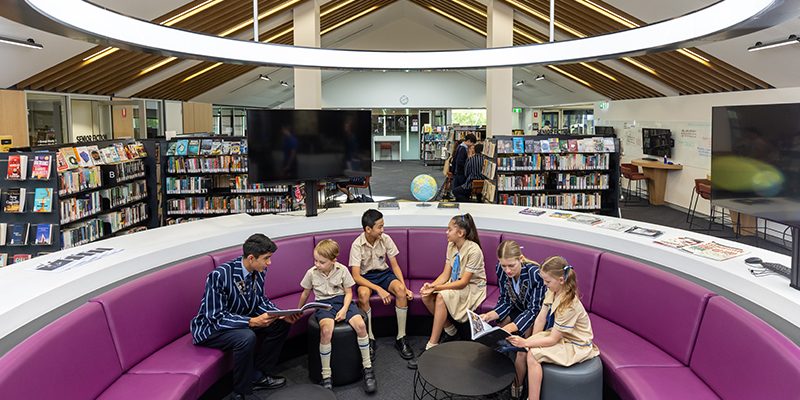
“In a competitive education environment, we are unashamedly committed to well-roundedness,” he says. “A lot of schools specialise in narrow ways which is totally fine. We invest in developing the whole person.”
That whole-person focus extends down to the small details. Corbett talks about the importance of a good handshake, eye contact, picking up rubbish when no one is watching, and greeting visitors with genuine interest and respect. When guests tour the school, students do not just say hello; they ask questions, engage, and use names where they can. Kindness at All Saints is not a slogan on a wall; it is something you can see and feel.
“Humanity plus,” Corbett jokes at one point. “We could call our blueprint that.” It is a light-hearted aside, but it captures something essential about All Saints. This is a school that is serious about academic rigour, future-focused skills, and strategic planning. Yet at its heart, it is about people: the young ones discovering who they are, the staff who guide them, the families who trust the school with their children, and the community that gathers on its fields, in its theatre, and under its trees.
As All Saints approaches its 40th anniversary, the school stands debt-free, in demand, and deeply grounded in its values. It is a place where smiling faces are easy to find, where parents return with their own children, and where the goal is not simply to get students into university or careers, but to send them into the world as capable, compassionate, and fully human individuals.
In an era of rapid change and digital disruption, that may be the most future-proof strategy of all.
Click The Cover To View Or Download The Brochure
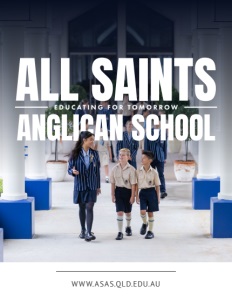
AT A GLANCE
Who: All Saints Anglican School
What: An innovative and inclusive educational jewel celebrating 40 years of academic excellence
Where: Merrimac, Queensland, Australia
Website: www.asas.qld.edu.au
PREFERRED VENDORS/PARTNERS

Aussie Rockmen : www.aussierockmen.com.au
For more than 15 years, Aussie Rockmen have been supplying high-quality landscaping products to residential and commercial clients throughout the Gold Coast. Whether you want to build a retaining wall, add edging to your tiled areas, or liven up your gardens, we have exactly what you’re looking for.

O’Brien Electrical Burleigh Heads : www.obrien.com.au
O’Brien Electrical Burleigh Heads has worked with All Saints Anglican School for many years and is proud to be part of their team, supporting the school with their many projects, along with continued maintenance and repair work.
 This information will never be shared to third parties