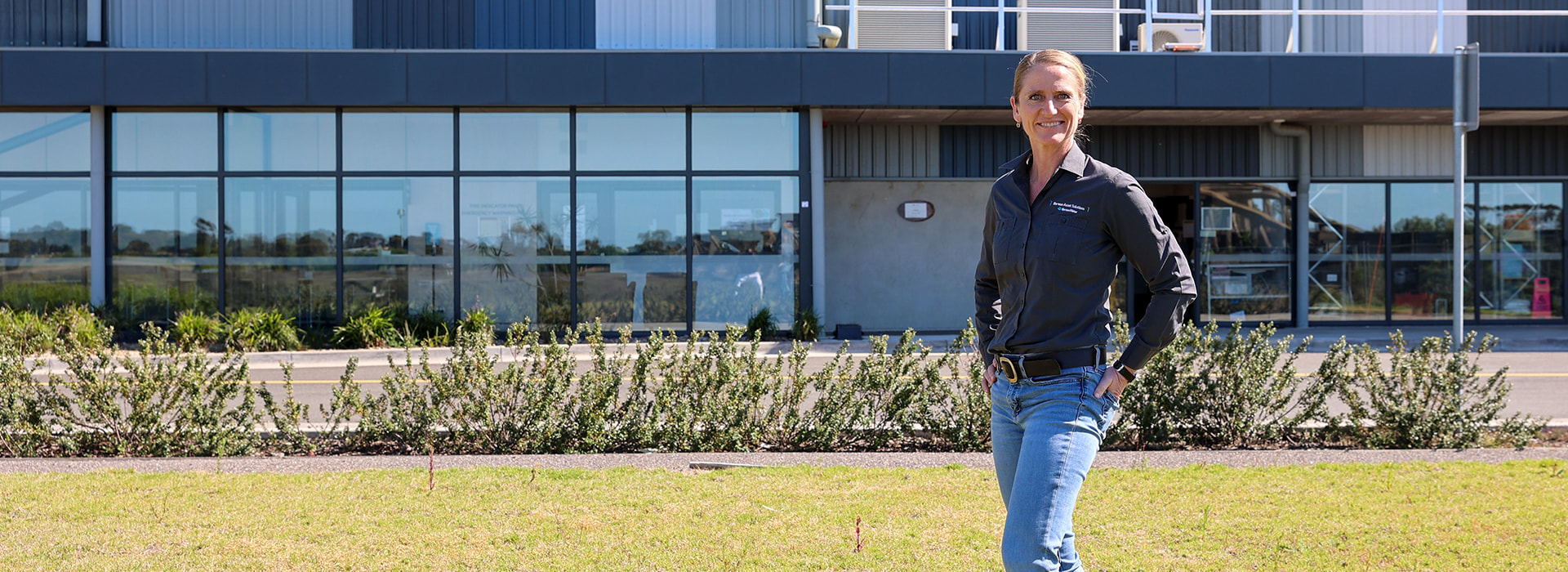
Pictured is Anna Murray, General Manager of Barwon Asset Solutions
Smart Asset Management delivering stronger communities
Delivering value, capability, and regional prosperity
When a utility talks about “regional prosperity,” it can sound like branding, until you see it embedded in how the work is structured, where jobs are created, and how value is returned to the community. For Barwon Asset Solutions (BAS), a wholly owned subsidiary of Barwon Water, that idea isn’t a slogan. It is the logic behind why the organisation exists, how it has grown, and why it is becoming an increasingly strategic lever for Barwon Water’s long-term sustainability.
BAS was formed in 2017 as part of a major strategic shift by Barwon Water, the Victorian water authority responsible for harvesting, treating, and distributing water across the Barwon region, as well as collecting and treating wastewater. Like many utilities, Barwon Water’s maintenance model had evolved, moving from internal delivery to outsourced maintenance, then back again.
According to BAS General Manager Anna Murray, the decision to insource maintenance was driven by the practical question of cost. Could the work be done more efficiently without high external overheads, while remaining community-based?. Barwon Water’s vision is regional prosperity, and that includes creating local opportunity, retaining skilled talent in the region, and supporting a thriving community where people can afford their bills and see a future for their families.
The key nuance is how Barwon Water chose to do it. Instead of building insourced maintenance department as just another internal department, BAS was established to serve the maintenance needs of Barwon Water, while also having the ability to generate revenue externally.
At inception, BAS had 55 employees, with two women, both in administrative roles. Today, it has grown to approximately 160 employees, with women representing about 23% of the workforce in all areas of the business, a significant shift in a predominantly field-based, trade-heavy environment.
Why the Subsidiary Model Matters: Revenue That Protects Customers
The financial reality for Australian water authorities is straightforward: they don’t operate like typical government-funded departments. Revenue comes primarily from customers paying water and sewer charges, and pricing is shaped through long-term regulatory planning. Every five years, Barwon Water must balance what it can collect through rates with what it must spend to maintain and renew an aging and expanding asset base, while also maintaining customer affordability.
That’s where BAS plays a uniquely strategic role.
As a separate entity, BAS can pursue external work and generate additional revenue streams. Those returns can then help Barwon Water offset pressure on customer bills, supporting affordability while still enabling investment in essential infrastructure.
The BAS model isn’t just about delivering maintenance differently. It is about creating a mechanism that helps a regional utility keep costs down without cutting capability.
Core Capabilities: Civil, Mechanical, Electrical—and Increasingly Digital
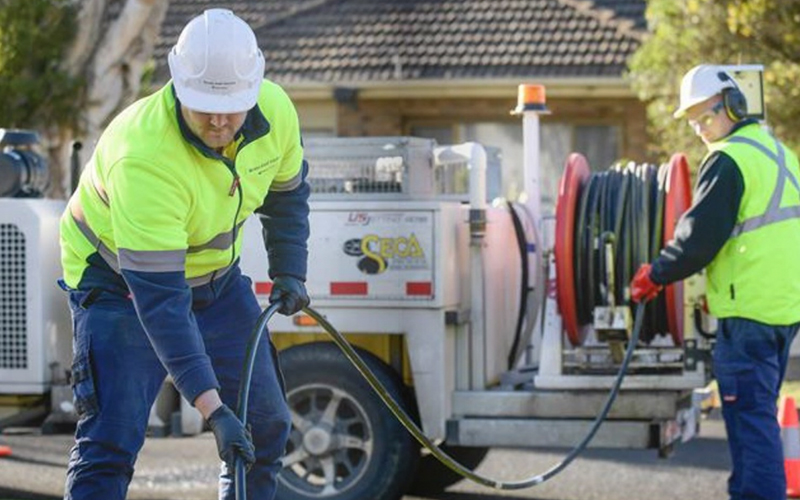
At its foundation, BAS delivers the work most people associate with a water authority: keeping essential services running. That includes reactive civil works such as fixing burst water mains, addressing sewer leaks, and responding to customer-reported issues in the field. A large portion of the day-to-day program remains driven by real-time response; when a community member reports water on a footpath, BAS crews are deployed to locate and repair the fault.
The skill set is evolving quickly. Like many utilities, Barwon Water is accelerating into a more digital operating model, with sensors and monitoring becoming standard across networks. BAS is adapting to a future where a leak is detected by data before a customer notices it, requiring teams to blend traditional trade knowledge with new tools for pinpoint detection, location, and verification.
Alongside civil operations, BAS supports the mechanical and electrical backbone of water infrastructure, including pumps, switchboards, instrumentation, and plant maintenance. Trades across the business include electricians, fitters, fabricators, and civil operators—traditional roles that are now increasingly intersecting with modern systems and monitoring.
A Growing Projects Function for Complex, “Fiddly” Work
One of BAS’s most notable growth areas is project delivery. While Barwon Water retains responsibility for major capital works, BAS has established a strong niche in projects typically in the $2–$3 million range, jobs that are too complex or interface-heavy to be managed efficiently through conventional models, yet not always suitable for outsourcing to a principal contractor with major margin layers.
These are often brownfield projects, work that must be completed while essential services continue flowing andwhere sequencing, stakeholder coordination, and risk management are central to success.
That capability has expanded rapidly. BAS is now on track to deliver roughly $25 million in capital projects for Barwon Water within a year, work that did not exist as part of its early mandate but has become a major part of the operating model.
The Three-Part Growth Plan
BAS describes its growth trajectory through three complementary lenses.
First, the business must grow in line with Barwon Water’s needs. As the parent authority expands, modernises, and shifts technologies, BAS must keep pace with the service demands and capabilities required to support the region’s essential assets.
Second, BAS is scaling external works. The logic is simple: margin generated in the external market supports Barwon Water’s ability to keep customer bills lower. BAS bids in open tender markets and competes for work, but it does so with the governance, safety, environmental standards, and “care for country” mindset that come from operating inside a water authority environment. Sometimes that premium approach is exactly what a client wants. Sometimes the market only wants the lowest price. BAS is increasingly selective in pursuing external opportunities that align with its standards and values.
Third, BAS is investing in new capabilities that fill gaps in the water sector. These include innovation-based solutions that reduce time, cost, and risk for utilities, and then offering those services externally.
For Anna Murray, the three lenses are interconnected. “When we grow alongside Barwon Water, compete selectively in the market, and invest in innovation, we’re creating a business that strengthens the region’s infrastructure while remaining commercially disciplined. That balance is what sustainable growth looks like for BAS.”
Land, Water, and Environmental Services: A Niche with Real Demand
Beyond pipes and plant, BAS maintains a significant portfolio of land reserves includingreservoir sites, easements, channels, and associated assets. What began as standard grounds maintenance has evolved into a broader environmental services capability with high relevance to councils and developers.
A standout example is Water Sensitive Urban Design (WSUD) maintenance. As housing estates expand, councils increasingly require developers to build wetlands and stormwater management assets that control runoff and protect waterways. Once these assets are built and handed to councils, many councils lack the capability and resourcing to maintain them properly, creating an operational gap that BAS has moved quickly to fill.
BAS now maintains WSUD sites as a speciality service for multiple councils, carving out a position in a space
That requires a deep understanding of rain gardens, wetlands, vegetated swales, and biofiltration systems.
The land services portfolio is also expanding into land rehabilitation and revegetation, including restoring large sites, some previously used for pine plantations, back to natural ecosystems. Where possible, these programs may support carbon sequestration initiatives, potentially generating carbon credits while improving environmental outcomes. BAS also works closely with Traditional Owners to ensure cultural values are embedded in land management approaches.
Wastewater Heat Recovery: Turning Lost Energy into a New Opportunity
Among the most forward-looking initiatives in the BAS pipeline is wastewater heat recovery, a concept that is well established internationally but still emerging in Australia.
Wastewater in sewer networks often runs at relatively consistent temperatures, largely due to domestic hot water inputs. Rather than the heat going to waste, BAS is exploring the potential to extract that thermal energy and repurpose it for facilities with continuous heating demand, such as council swimming pools that currently rely on gas boilers.
If implemented successfully, the model will support emissions reduction goals, lower energy costs for community facilities, and position BAS at the forefront of an innovation not yet widely adopted in Australia.
It also represents the third growth pillar in action: developing new capability, proving it locally, and then offering it more broadly.
Culture Built on Community, Opportunity, and Service
Internally, BAS’s cultural identity is strongly connected to place. When employees were surveyed as part of the growth plan process, what resonated most was a sense of community. Our people live in the region, raise their families, and take pride in maintaining the assets that keep it functioning.
That “service” mindset extends to how BAS teams interact with the public. Field crews regularly engage with residents during reactive response work, and the organisation puts strong emphasis on a customer-first approach, that is, communicating respectfully, minimising disruption, and treating community members as stakeholders, not obstacles.
Over the last few years, BAS has also undergone a cultural lift as it moved away from the legacy mindset of “contractor” and toward the reality of being a valued part of the broader Barwon Water group. Leadership describes measurable gains in engagement and trust through the Victorian Public Sector survey process, with significant increases in employees feeling heard, supported by managers, and valued by senior leadership.
Shifting the Gender Balance Through Practical Recruitment Changes
One of BAS’s most compelling recent achievements has been increasing female participation in a field-based workforce, moving from two women in admin roles at inception to 23% women across all areas of the business today.
Rather than approaching this as a branding exercise, BAS asked the women already in the organisation what needed to change. The answer was practical: job ads needed to clearly describe the work, titles needed to reflect the actual role, and applicants needed someone relatable to speak to.
BAS rewrote position descriptions to accurately portray field-based outcomessuch as working outdoors, finishing at consistent times, completing tangible work each day, and going home without “after-hours admin” overhang. The organisation also changed the listed contact person to a woman in the role so applicants could speak peer-to-peer, and created videos showing the real day-to-day work with women visibly represented.
The impact was immediate. A campaign that previously might have drawn only a handful of female applicants resulted in 22 women applying, and BAS hired five women from that intake, an outcome that later received award recognition.
Traineeships and Apprenticeships as a Workforce Engine
BAS’s traineeship and apprenticeship programs are central to how the organisation builds capability and improves diversity.
The traineeship pathway provides a structured entry point, particularly for school leavers or career changersto build practical skills and determine whether the work is the right fit. Over five years, BAS expects to have supported around 22 trainees, and leadership notes that those who complete the pathway are far more likely to transition into permanent roles.
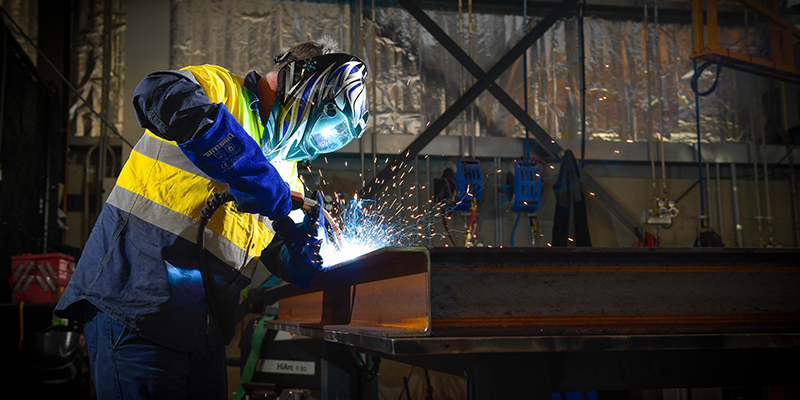
Apprenticeships in electrical, fabrication, and fitting are similarly critical and have proven to be one of the strongest mechanisms for bringing more women into trades where the external candidate pool remains limited. BAS also notes that, as a government-owned entity, it may not always outbid top-tier contractors on salary, but it can offer the stability and benefits that matter over the long term, including parental support programs and flexible working arrangements that are increasingly important to both women and men in field-based roles.
Near-Term Priorities: Service Excellence, Safety, and External Growth
Looking ahead 12 to 24 months, the vision is anchored in three priorities.
The first is service excellence, ensuring that whether the client is Barwon Water or an external organisation, the experience is consistently professional, customer-focused, and values-driven.
The second is safety, with particular attention to reducing musculoskeletal injuries. While BAS is not necessarily operating in high-risk environments day-to-day, repetitive physical demands are impacting well-being. Leadership is focused on redesigning tasks and improving work methods to reduce strain and prevent injury.
The third is external growth, expanding revenue-generating work that supports the parent authority’s affordability objectives. In practical terms, that means continuing to develop new capabilities, selecting external projects aligned with BAS’s quality and governance standards, and delivering margins that help keep regional customer bills low.
A Regional Model with Broader Relevance
Barwon Asset Solutions is not simply a maintenance unit. It is a deliberately designed structure that delivers essential services, builds local capability, creates pathways into trades, and generates external revenue to support customer affordability. It is, in effect, a regional prosperity model expressed through operational strategy.
From civil response crews and complex brownfield projects to WSUD maintenance, land rehabilitation, and emerging wastewater heat recovery, BAS reflects what happens when a utility aligns infrastructure delivery with community outcomes, then builds the business architecture to sustain it.
As BAScapabilities continue to expand, its impact may prove to extend well beyond the Geelong region, offering a blueprint for how water authorities can strengthen service delivery, workforce development, and financial resilience at the same time.
AT A GLANCE
Who: Barwon Asset Solutions
What: a fast-growing asset maintenance company with innovative solutions and a forward focus that supports the water industry
Where: Breakwater, Victoria, Australia
Website: www.barwonassetsolutions.com.au
PREFERRED VENDORS/PARTNERS

Auswide Plumbing and Civil – www.auswideplumbing.com.au
Auswide Plumbing & Civil, established in 2007, delivers high-performing civil and utilitiy infrastructure projects across Victoria. Trusted for safety, quality, and technical expertise, Auswide completes projects with a team of superstars for water authorities, road & rail major projects, private developers and government projects.
CMP Consulting Group Pty Ltd – www.cmpgroup.com.au
CMP Consulting Group is an Australian-owned engineering consultancy specialising in water infrastructure. CMP partners with public and private clients, delivering innovative, sustainable solutions in design, construction, and asset management, with a commitment to quality and creating a better water future for communities across Australia.
 This information will never be shared to third parties