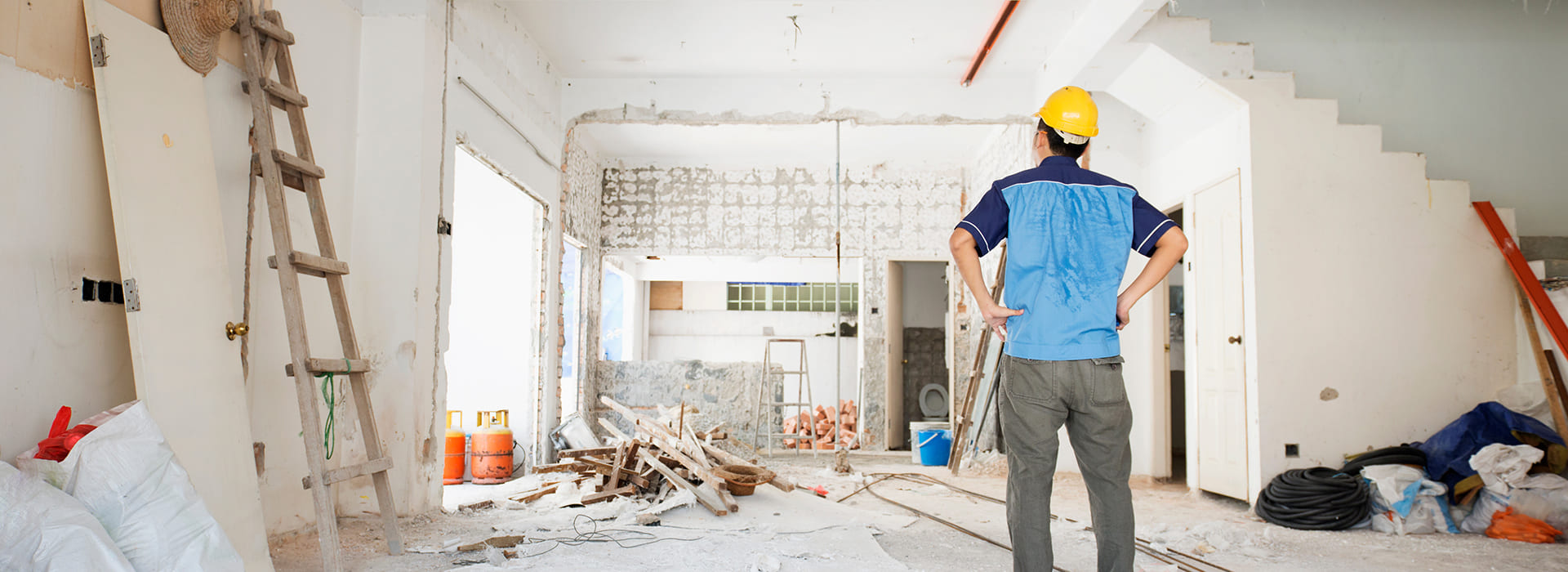
Building High-Performance Homes, Constructed With Integrity
A Builder That Incorporates Innovation with a Customer First Approach
Turning ten this year, Enduro Builders was founded on a simple frustration—and an ambitious belief: residential construction doesn’t have to be disorganized, inconsistent, or resigned to “that’s just how it is.”
For Director Jackson Digney, the company began after leaving another builder and deciding he could deliver a better experience for clients and a better standard for the industry. What followed, he admits, was harder than expected—not because the vision was unclear, but because maintaining a high bar requires something most builders never fully commit to: systems, training, accountability, and follow-through at every level.
From the beginning, Enduro’s identity has been shaped by two pillars. The first is operational integrity—being organized, prepared, and reliable in a sector where delays, miscommunication, and quality drift can become normalized. The second is a deep commitment to sustainability and energy efficiency, with an emphasis on building homes that are healthy, comfortable, durable, and easy to live in over the long haul.
A Practical Approach to Sustainability and Passive House Performance
Enduro Builders primarily constructs certified Passive Houses, a globally recognized standard for high performance and ultra-low energy consumption. But Jackson is careful to emphasize that certification isn’t always the right fit for every client, particularly when budgets are constrained. Rather than taking a rigid “only Passive House” stance, Enduro offers what it calls a high-efficiency house specification—designed to deliver many of the core performance benefits of Passive House principles, without requiring the full certification pathway.
This approach has proven popular with homeowners who want meaningful gains in comfort and energy use, but still need financial flexibility. It also reflects Enduro’s broader philosophy: building better should be accessible, not elitist—and high performance should be measured in real outcomes, not just labels.
Sustainability, in Enduro’s view, is bigger than energy bills. It’s also about how long a house should last, and whether the construction industry is building responsibly for the future. Jackson points to a growing issue he finds deeply troubling: homes being demolished at surprisingly young ages because they’ve simply reached the end of their service life.
While he acknowledges much of this evidence is anecdotal, the trend is clear enough to raise alarm. When it becomes cheaper to demolish and rebuild than to renovate—particularly with cheaply built housing stock—the industry fuels an ongoing cycle of material waste and short-lived construction.
Enduro aims to disrupt that cycle by designing and building homes intended to last 100 years or more, which Jackson says is neither difficult nor dramatically more expensive than building a conventional home. That long-life mindset is paired with sustainable construction practices on the front end, including material selection that minimizes embodied energy, reduces resource intensity, and cuts waste. It’s a full lifecycle view—build in a way that uses fewer resources up front, then ensure the result lasts long enough to justify the investment.
Building Better Is Becoming More Valuable
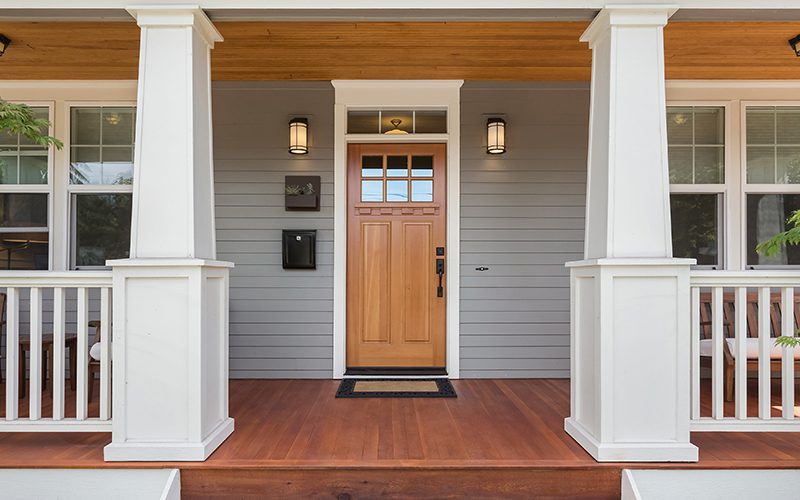
Another reality shaping Enduro’s market is the rising cost of construction over the past few years. Jackson notes that buyers are increasingly placing greater value on the quality of the improvement—not just the land—particularly when the home is clearly better built and more thoughtfully designed. In his experience, high performance, architectural detail, and durability are becoming more measurable differentiators at resale, especially when compared to minimum-code homes produced by volume builders.
It’s a shift that challenges an old adage in real estate—“you make your money on the land.” Enduro’s position is that build quality is no longer inconsequential; when building costs climb and homeowners become more educated, the market begins to reward construction that solves comfort and health issues instead of repeating them.
Culture by Design: Accountability With Nowhere to Hide
Enduro currently employs 16 people, structured across a range of roles with intentional duplication to build resilience. That role overlap protects projects when staff take leave or fall ill, supports growth, and ensures continuity without bottlenecks. But the most defining element of Enduro’s internal model is culture—and specifically, a culture of accountability that runs in every direction.
Jackson describes Enduro as an employer-of-choice operation built around clarity, preparation, and follow-through. Meetings are prepared for. Schedules are set before work begins. Commitments are treated as commitments. And importantly, accountability isn’t top-down—it’s shared. Team members are expected to hold each other accountable, and Jackson expects to be held accountable as well.
He points to a telling example: a new employee who lasted only a week. The individual, Jackson says, struggled with the reality that Enduro actually operates the way it says it does. For someone accustomed to ambiguity, shortcuts, and places to hide, a high-clarity environment can feel uncomfortable. For the right people, however, it becomes energizing—because standards are clear, the work is purposeful, and the team shares a collective pride in delivering what was promised.
This cultural structure has also enabled a key turning point: Jackson is increasingly able to step out of day-to-day execution and focus on growth, confident that systems and team accountability will maintain performance without constant oversight. In a construction environment where many businesses depend heavily on the owner’s daily intervention, Enduro’s aim is to build an organization that runs to standard—because the standard is embedded in how the team operates.
Project Momentum as a Financial Strategy
Enduro’s operational discipline isn’t just about professionalism—it’s about survival in an industry where many builders fail while still “busy.” Jackson describes a common pattern: projects start fast, hit obstacles, then slow to a crawl. Problems get parked. Responsibility gets passed. Work spreads across too many sites, none of which are progressing enough to generate revenue—while overheads remain constant.
Enduro combats that by treating project momentum as non-negotiable. When roadblocks arise—especially with approvals and council processes—the team becomes the “squeaky wheel,” pushing relentlessly to resolve issues rather than letting them linger. They propose solutions, follow up consistently, and ensure projects never sit idle.
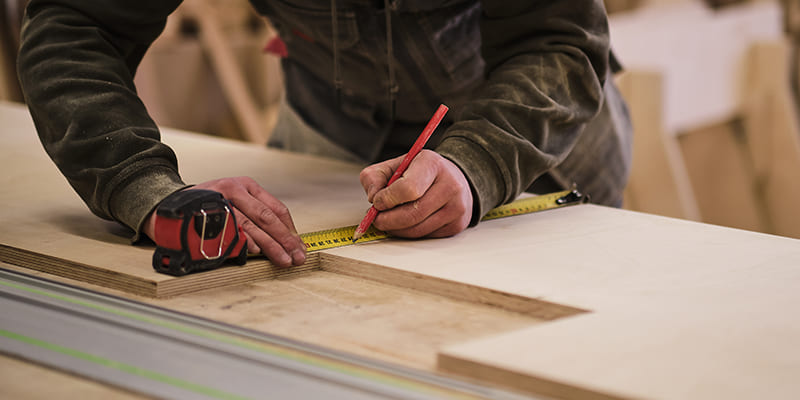 The logic is straightforward: progress drives billing, billing drives cashflow, and cashflow sustains the business. The client benefits through clearer timelines and fewer stalls, while the company benefits through stability and profitability. It’s “the basics,” as Jackson puts it—but in construction, basics done consistently is what separates reliable builders from chaotic ones.
Partners and Trades: Selection, Vetting, and Standards Enforcement
Managing external partners is one of the greatest challenges in scaling a quality-driven building business, and Enduro’s model is deliberately structured to prevent misalignment before it reaches the site. With roughly 25 projects per year and a goal of reaching 100 projects annually within eight years, Enduro has developed an internal vetting process for new trades and suppliers. It begins with structured conversations—effectively a questionnaire delivered live—designed to reveal whether a partner truly aligns with Enduro’s standards or is simply saying what they think will win the work.
Once partners are engaged, Enduro monitors quality closely. If a trade delivers below the expected standard, they return until the work meets the mark. Jackson is candid that a common industry habit is to “sell at a ten and deliver at a seven,” expecting the builder to accept the gap. Enduro’s approach is the opposite: the standard is declared upfront, and the project does not move forward until it is achieved.
When Enduro finds strong partners, it prioritizes long-term relationships and encourages those businesses to grow alongside Enduro. If a partner does not want to scale, Enduro still maintains them as a primary supplier within their capacity, supplementing overflow with secondary partners. It’s a practical strategy that protects both quality and continuity.
Marketing for the Long Game
Alongside operational refinement, Enduro has made major moves in marketing. Jackson describes the past year as a period of simplification—tightening internal processes, trimming overly complex documentation, and refining onboarding so new hires can get up to speed faster without losing the standards the company is built on. In parallel, Enduro has increased its investment in content production and digital marketing.
 The company runs paid campaigns through Google Ads and Meta, supported by organic presence across Google Business Profile, Instagram/Facebook, LinkedIn, and YouTube. Interestingly, Jackson admits he was skeptical about Google Business posts at first, but has been surprised by the lead flow they generate. YouTube is seen as more top-of-funnel—less immediate conversion, but valuable for staying visible to future clients who are still early in their building journey.
Enduro is also refining its email marketing, reviewing a large legacy library and removing content that now reads as overly “salesy” or spam-like. The goal is to ensure the messaging reflects the same integrity the company insists on operationally—educational, clear, and aligned with the kind of client Enduro wants to attract.
The Next Chapter: Prefabrication and Vertical Integration
Looking forward, Jackson identified two strategic initiatives that could reshape Enduro’s model and broaden access to high-performance housing. The first is prefabrication. He is a strong believer in off-site construction as a pathway to better quality control, reduced waste, and improved efficiency.
The challenge is finding the right method for Enduro’s niche—high-end, bespoke homes—without oversimplifying what makes them unique. Jackson notes that this model already works successfully overseas, especially in Europe; the primary barrier is investment timing and the willingness to allocate capital now for returns that may take time to mature.
The second initiative is vertical integration, which may arrive sooner.
Jackson wants to lean further into internal capacity by building out Enduro’s own carpentry teams and eventually expanding into other trades as project volume supports full-time workloads. The strategic aim is clear: reduce reliance on fragmented subcontracting, improve quality consistency, and ultimately reduce the cost of delivering high-performance homes. In Jackson’s view, most homes—custom or volume—are still being built to minimum code, and the comfort and health problems remain largely the same across price points. Prefab and vertical integration are not side projects for novelty; they are designed to make “building better” more competitive and more attainable.
A Builder Focused on the Basics—and the Future
Enduro Builders’ story is, in many ways, a story about raising the bar by returning to fundamentals. Agree what will be done. Build the plan. Prepare properly. Follow through. Push through obstacles. Deliver the standard that was promised. For Jackson and his team, those basics become the foundation for everything else—client satisfaction, staff accountability, sustainable growth, and homes that will perform and endure long after trends fade.
In a world where building costs are rising and expectations are changing, Enduro is betting that quality, durability, and energy efficiency won’t remain niche—they’ll become the new baseline for homeowners who think beyond today and build for the next century.
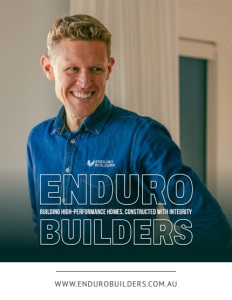
Click The Cover To View Or Download The Brochure
AT A GLANCE
Who: Enduro Builders
What: A successful builder that is grounded in integrity and sustainability
Where: Canberra, Australia
Website: www.endurabuild.com.au
PREFERRED VENDORS/PARTNERS

Australian Window Solutions – www.australianwindowsolutions.com.au
Since 2009, Australian Window Solutions has been the go-to provider of German-engineered double and triple glazing. Adelaide-made, ultra energy-efficient uPVC windows and doors are BAL40 and Passivhaus ready, lead-free, recyclable, and precision-crafted via automated CNC production, delivering fast turnaround, consistent quality, competitive pricing, and nationwide supply across Australia wide markets.
 This information will never be shared to third parties