
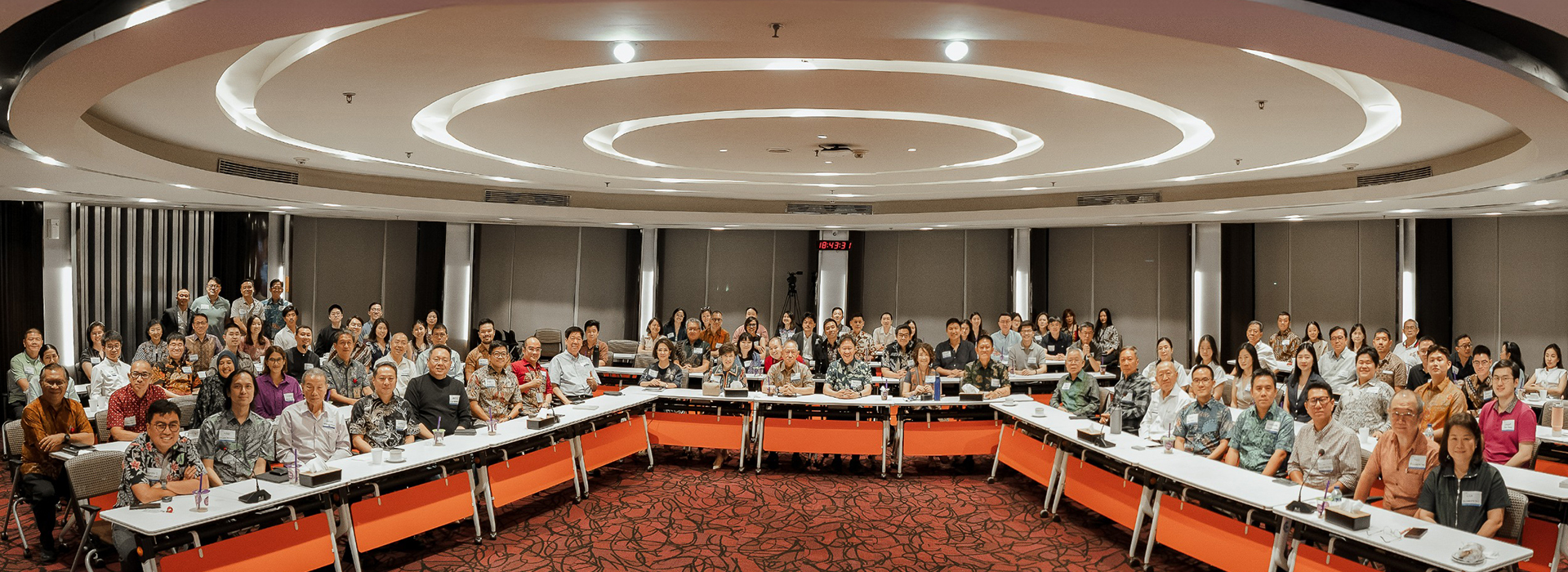
Guiding Legacy and Stewarding Wealth
Building Impact Across Generations for Family-Run Business Success
In boardrooms, family homes, and quietly held companies across Asia, an unprecedented transfer of wealth is underway. Over the next decade, trillions of dollars are expected to move from founders and second-generation leaders to the next wave of family stewards. For many families, that prospect is as daunting as it is exciting. They are dealing not only with business performance and market disruption, but also with succession planning, governance, identity, and legacy.
Sitting right at the intersection of those questions is Family Business Network Asia (FBN Asia), the regional chapter of one of the world’s largest global family business communities. Operating as a nonprofit, FBN Asia has become a trusted space where families can learn from one another, experiment with new ideas, and navigate the complexity of “family plus business” in an environment that understands both.
Part of a Global Community, Rooted in Asia
The Family Business Network was founded in Switzerland in 1989. What began as a small circle of family business principals wanting to share experiences has grown into a global organization spanning around 65 countries, 33 national and regional chapters, and close to 5,000 family members worldwide.
FBN Asia, headquartered in Singapore, was established in 2009 by a group of Asian family business leaders who saw an unmet need in the region: a trusted platform where families could openly discuss the unique issues that arise when ownership, management, and bloodlines intersect.
From the beginning, the vision was simple but powerful. Family businesses across Asia tend to face remarkably similar issues – succession planning, governance structures, constitutions, wealth transfer, and family roles – yet often feel they must solve them alone. FBN’s founders believed that not every family needs to reinvent the wheel. If one family has found a way through a complex transition, another family may be able to learn from their journey and adapt those lessons to their own context.
Today, that principle remains at the core of FBN Asia’s work. The network exists first and foremost as a space for honest dialogue among peers: a place where the challenges of being a daughter, son, sibling, in-law, or next-generation leader in a family enterprise can be explored without judgment and without agenda.
Local Roots, Regional Reach, Global Connections
FBN Asia’s members are spread across eight to nine key markets, including Singapore, Malaysia, Indonesia, China, Hong Kong, Korea and other Southeast Asian economies. Many of those families are themselves global, with members educated overseas, living in multiple countries, and operating cross-border businesses. The organisation’s activities are designed to reflect that reality.
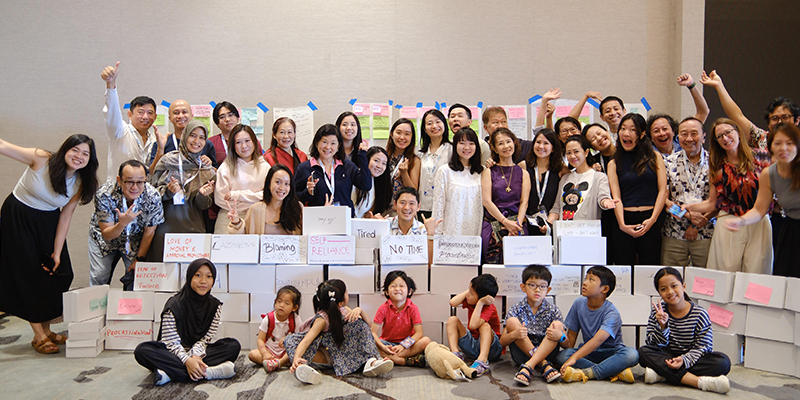
Communication is multi-layered. At one level, there are digital touchpoints: a dedicated app where members can see upcoming activities and resources; regular email newsletters; and active WhatsApp communities that connect families across borders. At another level, there are in-person local events in each major market, where families meet in their home city to explore topics, hear from peers, and build trust over time.
Layered over is a regional programme of gatherings that reflect the global nature of Asian families. Some members may be Indonesian by origin but based in Singapore, or have parts of the family in Hong Kong, Europe or North America. Regional activities allow these families to meet others with similarly dispersed footprints and explore shared questions around identity, governance and continuity.
And then, of course, there is the global dimension. FBN hosts two major international events each year: a Next Generation Summit focused on family members under 40, and a Global Summit that brings together 700 to 800 families from around the world.
In 2025, the Next Gen Summit will be held in Kuala Lumpur, marking the first time Asia hosts the global next-generation community. Young leaders from all continents will come together in the region to learn about Asian family enterprises, deepen global networks, and explore leadership in a family business context.
Later in the year, members from across the FBN world convene at the Global Summit – this year in Miami – to dive into topics ranging from succession planning and governance to impact investing, sustainability, and community engagement. For many families, these events are a highlight of their learning calendar, offering access to a truly international perspective grounded in lived realities rather than theory.
Peer Groups, Safe Spaces and Shared Journeys
One of FBN Asia’s most distinctive offerings is its peer mentoring programme, known internally as the “campus” model. In small groups that meet monthly or bi-monthly, family members from different enterprises come together in a confidential setting to discuss personal challenges, family dynamics, and strategic decisions. The focus is not on technical advice, but on perspective: hearing how other families have handled similar issues, and considering options that may not have occurred to them.
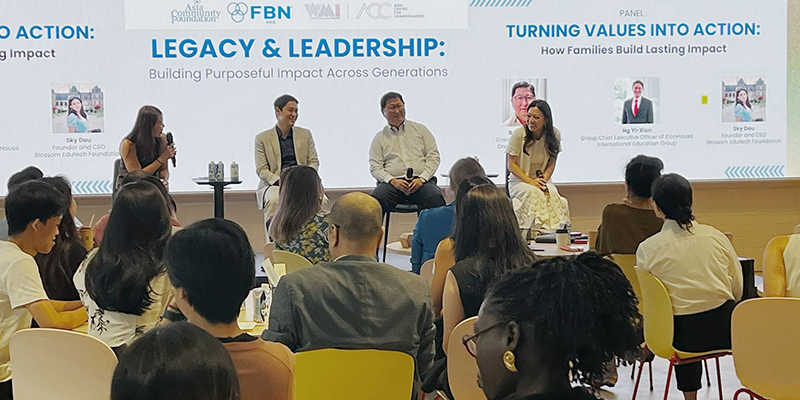
The emphasis on psychological safety is deliberate. The organisation understands that many of the most difficult issues in family business are not strictly financial or legal; they sit at the intersection of emotion, loyalty, identity and fear. In a campus group, participants can talk about generational conflict, sibling tensions, questions of fairness and role clarity, or their own feelings about joining — or not joining — the family enterprise, knowing that others in the room share some version of the same story.
“Families don’t come to learn from executives,” the FBN Asia team explains with a smile. “They come to learn from each other.”
A Lean Team, Powered by Families
On paper, FBN Asia is run by an executive team of just four people. That might seem surprisingly small for an organisation with such a wide geographic reach and an ambitious programme of activities. In practice, the “secret” is the network itself.
FBN describes itself as an organisation created by families, for families. Many of the families who have benefited from its work over the years now give back as speakers, mentors, hosts and contributors, creating a flywheel effect. The executives’ role is less to stand at the front of the room and teach, and more to connect the dots: to link families with peers who can help them, to curate relevant advisers and institutions, and to orchestrate learning journeys that match the needs of different generations and geographies.
Partnerships are an important part of this ecosystem. FBN Asia collaborates with wealth management firms, family business advisers, large professional services firms such as PwC and Korn Ferry, and academic institutions including INSEAD, IMD, and leading universities in Singapore. These partners bring technical expertise and facilitate workshops, while the families themselves supply the lived experience and case studies that bring topics to life.
Succession, Governance and the Coming Wealth Transfer
If there is one theme that dominates FBN Asia’s horizon for the next decade, it is the scale of wealth and leadership transition across the region. A large proportion of Asian family businesses are now moving from second to third generation. Culturally, there is a persistent saying in many Asian societies that “wealth does not pass the third generation” – a narrative that can weigh heavily on both founders and heirs.
At the same time, research and media commentary point to an unprecedented wave of wealth transfer in Asia, measured in the trillions of dollars. In that context, the risks and opportunities are enormous. Families are being challenged not only to preserve capital and businesses, but also to decide what they want that capital to do – for their families, for their communities, and for the wider world.
FBN Asia’s work in this area revolves around helping families think long-term and systemically. That includes encouraging them to develop family constitutions, clarify governance structures, define roles and decision-making processes, and understand that succession is not a one-off event but a process that takes years to prepare and execute.
The organisation is also keenly aware of what happens when these issues are neglected. Public examples of high-profile family disputes, while relatively rare, serve as reminders of what is at stake when communication breaks down or governance is left to chance. FBN Asia takes quiet pride in the belief that, for its members, exposure to other families’ experiences and mistakes reduces the risk of those stories repeating.
Legacy, Sustainability and Impact
While succession and governance are core themes, FBN Asia is equally passionate about the positive potential of family enterprises. Across Asia, an estimated 80 percent of GDP is driven by family businesses. Many of these organisations are long-term owners with deep local roots, significant resources, and the freedom – particularly when not publicly listed – to think beyond quarterly results.
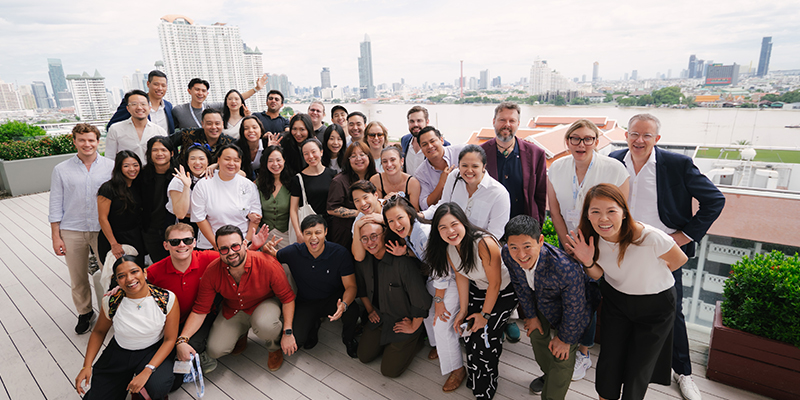
FBN Asia is actively encouraging families to see themselves not only as wealth stewards but also as impact stewards. That includes reconsidering their operating businesses through the lens of sustainability and ESG, and exploring impact investing, philanthropy, and foundation-building as part of their legacy planning.
Some global family names are already well known in this space, from finance and technology to pharmaceuticals and ocean conservation. FBN Asia wants to see more regional families step into that arena in ways that reflect their own values and contexts. The goal is not to prescribe a particular model, but to inspire: to show what is possible when families align purpose, capital and long-term thinking.
Family First, Then Business
Underpinning all of this is a simple belief: strong families build strong businesses. FBN Asia consistently emphasises that looking after the family – its cohesion, communication, and sense of shared purpose – is not a distraction from business, but a prerequisite for its long-term health.
For outsiders, family businesses are often associated with brand names, balance sheets and market share. Inside FBN Asia’s community, the conversation sounds very different. It is about values and vocation, sibling relationships and identity, the meaning of stewardship and the responsibilities that come with inherited wealth.
For families seeking a place to explore those questions with people who truly understand, FBN Asia offers something rare in the region: a confidential, non-commercial, globally connected community dedicated to helping them navigate the journey – and, in the process, to strengthening the backbone of Asia’s economies for generations to come.
Click The Cover To View Or Download The Brochure
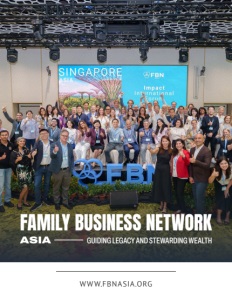
AT A GLANCE
Who: Family Business Network Asia
What: A supportive network to help families businesses with guidance in establishing successful family led businesses
Where: Singapore with offices throughout Asia
Website: www.fbnasia.org

 This information will never be shared to third parties