
On Track for 2026
Building Safer, Smarter Rail and Infrastructure Outcomes Across Victoria—and Positioning for the Next Chapter
In the infrastructure sector, longevity is rarely accidental. It is earned through delivery, strengthened through systems, and sustained through people who understand that consistency matters as much as capability.
For Ivan Holloway, that philosophy has guided a journey that began more than two decades ago in Europe and has since evolved into a fast-growing Australian operation delivering rail, telecommunications, building, Electrical and energy works across Victoria and beyond.
Today, the business operates as Global Rail Australia alongside GRA Networks—two brands that reflect a broad scope of services inside and outside the rail corridor. However, as Holloway explains, that dual-brand structure is also driving the company’s next major milestone: a planned rebrand and new website rollout targeted for Q2 2026, designed to unify the offering under a single name and reduce market confusion.
From Ireland and the UK to Australia’s Rail and Telecommunications Corridors
Holloway’s infrastructure roots trace back to 2001, when he and a UK-based business partner, Marco Lombardelli, launched Global Rail Services in Ireland and Global Rail Construction in the UK. Over time, those businesses grew significantly and ultimately changed hands in 2023, when part of the group was sold—prompting the Australian business to move forward as a standalone operation under the Global Rail Australia and GRA Networks banners.
Australia entered the picture through a client-driven opportunity. After delivering a light rail system in Ireland—the Luas—Holloway’s team was approached by an international signalling contractor seeking support for work in Western Australia. That request laid the groundwork for Global Rail Australia, initiated in 2012 and operational by 2013.
The timing, however, proved challenging. A decline in iron ore prices in WA impacted the original project path, forcing a pivotal strategic decision.
“We came at the wrong time,” Holloway notes. “We had mobilized, had staff ready—and then had to decide: fight or fly.”
They chose to move.
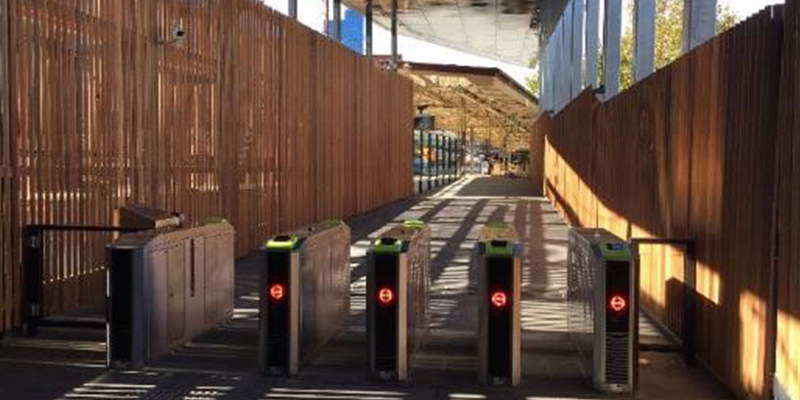
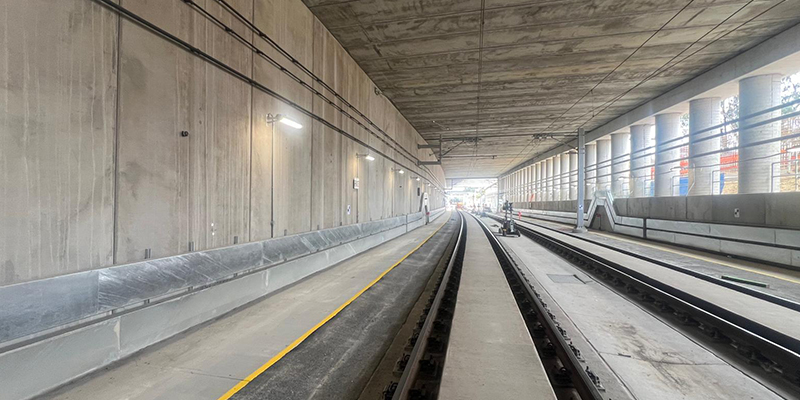
Leveraging contacts and resources already established in Australia, the company shifted operations to Victoria, where it began building momentum through station works, rail corridor infrastructure support, and associated systems delivery—work that would later expand into a multi-division capability.
Expanding Beyond Rail: Telecommunications, Buildings, Electrical, and Energy Works
While rail remains central, the company’s growth has been shaped by diversification that complements corridor-based delivery.
Alongside rail infrastructure, the team launched GRA Networks to deliver telecommunications works—initially focused on mobile network upgrades and new site builds for major operators including Telstra, Optus, and Vodafone, beginning in the 4G era and progressing through 5G, microwave systems, and integrated communications infrastructure.
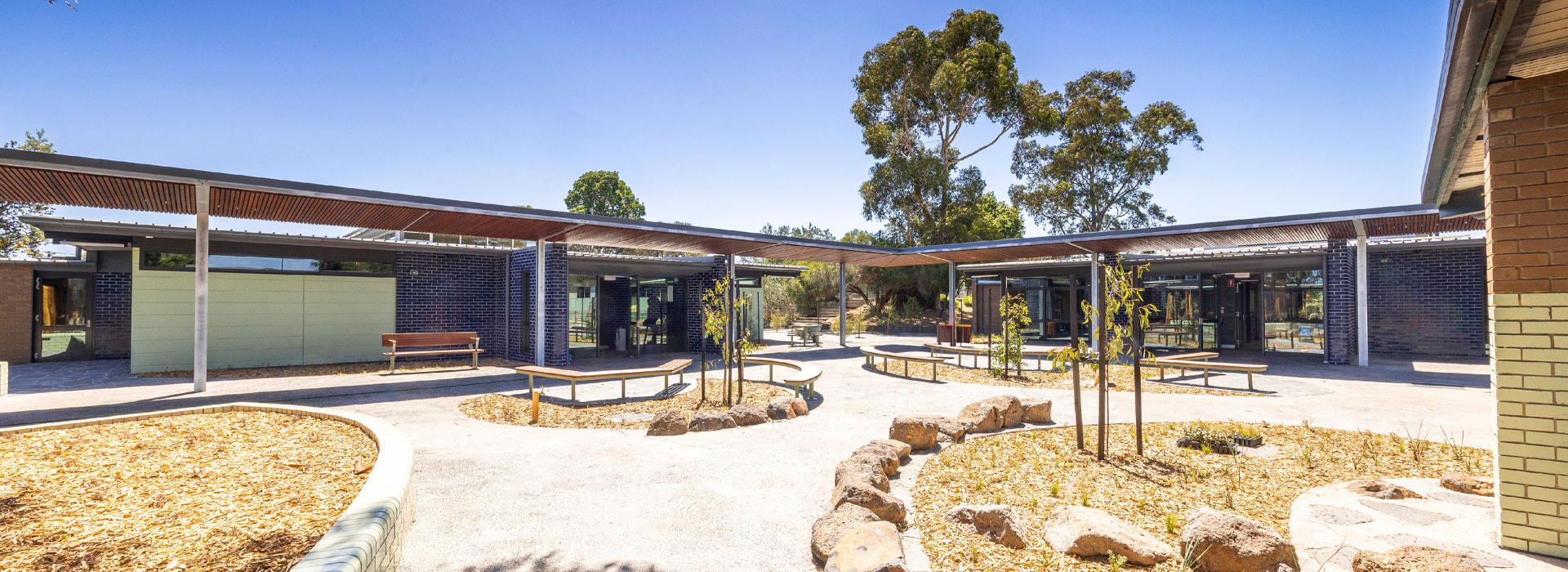
From there, the service offering broadened further into rail telecoms, electrical infrastructure, and building refurbishment—particularly within the rail estate. More recently, that building capability has expanded into projects for schools in Victoria, reflecting a broader market strategy without losing the discipline and standards demanded by rail environments.
The newest division reflects where infrastructure is heading globally: energy.
With a global client headquartered in France, ENEL X, the company is currently supporting the rollout of electrical energy sites across Australia—work positioned around reducing carbon footprints and supporting modernized energy infrastructure.
Social Responsibility Built Into Delivery
Across government contracting, “social responsibility” is increasingly a structured requirement, not a talking point—and Holloway is clear that his teams treat it seriously.
Many contracts contain deliverables linked to supplier diversity, local procurement, and social outcomes. In practice, that includes working with Indigenous-owned suppliers, supporting community initiatives, and ensuring equal opportunity employment policies are embedded across recruitment and workforce development.
It also extends into apprenticeship pathways, including opportunities for young Australians and apprentices from Aboriginal backgrounds. As Holloway explains, the goal is not to tick boxes, but to build real capability and improve outcomes across the workforce and supply chain.
The company also operates within Australia’s Industry Capability Network expectations, delivering local industry development plans and prioritizing Australian-based sourcing wherever possible—using international procurement only when materials or products are not manufactured domestically.
Supplier Partnerships That Function Like an Extension of the Team
One operational theme that comes through strongly is how the business views suppliers and subcontractors—not as third parties, but as part of the delivery ecosystem.
With a workforce of approximately 100 people, Holloway estimates the broader operating model runs roughly 50/50 between in-house resources and long-term subcontractor/supplier partnerships. The emphasis is on relationships built over time—trusted teams that align with the company’s culture, safety requirements, and delivery standards.
Among suppliers and partners referenced during the interview were Road and Rail, identified as an Indigenous-owned company supporting many jobs, as well as organizations including Avari Wireless (in a partnership arrangement supporting work connected to VicTrack), plus providers supporting steel, modular buildings, and security systems.
A Culture Built on Respect, Accountability, and Opportunity
Infrastructure companies can talk about values endlessly, but culture is ultimately proven in how people are treated on the ground.
Holloway describes a business anchored in five principles, with a clear emphasis on respect, accountability, and opportunity. The message is straightforward: people join to feel valued, and they stay because they are supported, developed, and trusted.
He’s equally direct about leadership’s role: leaders exist to support the teams doing the work, and titles don’t determine value.
If someone is sweeping a floor and doing it well, Holloway says, that role matters just as much as any other—because the system only functions when every part is respected and resourced.
That people-first approach has also shaped a strategic pivot over the past few years. Early growth relied heavily on talent brought from overseas through the wider group’s international footprint. But the business learned—through experience—that sustainable delivery in Australia required deeper local roots.
Over the last two to three years, the company has intentionally built a leadership team across its three divisions made up of professionals with a long-term commitment to Australia, creating stability and a foundation for expansion.
Safety Accreditation as a Non-Negotiable
In rail and critical infrastructure environments, safety is not a slogan. It is the foundation that determines whether a business can even pre-qualify for work, let alone deliver it.
Holloway points to an ISO-certified integrated management system across safety, quality, and environmental controls, describing it as a working system embedded in daily operations—not a “binder on a shelf.”
The company undergoes continuous internal surveillance and improvement cycles, coupled with external ISO audits and regular client audits. Inductions, ongoing audits, and contractor alignment form part of the broader approach—ensuring that safety expectations extend to subcontractors and suppliers as well.
“Safety is a non-negotiable for us,” Holloway says. “It starts with leadership and runs through the whole business.”
Rebranding in 2026: One Name, One Unified Platform
One of the most forward-looking signals in the interview is the planned rebrand in Q2 2026. The intent is to move away from two separate operating names and toward a single brand that reflects the full services portfolio across rail and non-rail environments.
The rebrand is also coupled with a new website rollout, designed to better represent the business post-2023 ownership changes and align the market with how the company actually delivers today.
For Holloway, it’s less about marketing polish and more about operational clarity—so clients, partners, and stakeholders can easily understand the company’s full breadth without assumptions tied to the word “rail” alone.
A Growth Plan Built on People, Capability, and Geographic Expansion
Looking ahead five to ten years, the vision is measured but clear: strengthen technical capability, continue building leadership depth, and expand beyond a predominantly Victoria-based footprint—particularly in infrastructure and building, while retaining flexibility to deliver telco and energy works across multiple states.
The foundation for that growth, Holloway emphasizes, is not simply winning more work. It is creating a structure where teams are incentivized, aligned, and equipped to lead—so the business can scale without compromising safety, culture, or delivery consistency.
Because in infrastructure, trust is earned slowly—and lost quickly.
Global Rail Australia and GRA Networks view the next stage as about consolidating what has been built, clarifying how it is presented to the market, and scaling with the same discipline that allowed the business to survive its earliest “fight or fly” moment—then grow into something far bigger.
AT A GLANCE
Who: Global Rail Australia and GRA Networks
What: The leading Infrastructure and construction rail transport organization with a clear route forward
Where: Dingley Village, Victoria, Australia
Website: www.theglobalinfrastructuregroup.com/global-rail-australia
PREFERRED VENDORS/PARTNERS

ASG Industrial – www.auswideplumbing.com.au
ASG is a trusted infrastructure services provider specialising in water, sewer, gas, rail and power networks and environmental services, and complex civil works. With over 20 years of industry experience, we deliver safe, efficient, end-to-end solutions across municipal, industrial, and commercial environments.
 This information will never be shared to third parties