
Crafting a Successful 2026
Building the Finest Homes in Victoria Through Craft, Discipline, and Long-Term Vision
Some partnerships in construction are formed in boardrooms. Others are forged on the tools, shaped by years of shared standards, hard lessons, and mutual trust. For Travis Hemming and Reece Nicoll, the story behind their business begins exactly there—on job sites, through apprenticeship, and across nearly two decades of working life.
The two have known each other for roughly 18 years, first connected through Travis mentoring Reece during his apprenticeship. Their paths diverged for a time as Travis moved to Melbourne to pursue city work and Reece built experience independently, yet the relationship stayed intact. Then came what was supposed to be a short-term reunion: Travis needed help on a city job for “a few weeks,” called Reece, and Reece stepped in.
That three-week assist turned into nearly 14 years of building a company together.
“It started as just the two of us on the tools,” Hemming recalls, describing the early stage of the business when they focused on carpentry work for high-end builders across Melbourne. The first few years were a grind—pushing for opportunities, trying to win work consistently, and proving their reliability in a demanding market where reputation is everything. Within about a year of stabilizing financially, they brought on an apprentice, then added more carpenters as the workflow grew.
For several years, the business operated in that space—high-end carpentry services supporting premium builders. But the long-term ambition was already forming. About a decade ago, both partners pursued and achieved their builder’s licenses, a major strategic milestone that enabled them to shift from being the team executing carpentry packages to becoming the team responsible for managing and delivering entire builds.
That change required a reset. They downsized, refined their operating model, and deliberately repositioned themselves—not as volume contractors, but as builders with a very specific target market.
A Clear Focus: Quality Homes, Done Properly
From the beginning of their transition into licensed building, Hemming and Nicoll aligned around a simple, uncompromising goal: to build the nicest homes in Victoria.
“We want to be building the nicest houses in Victoria—that was our objective at ground zero,” Hemming says. “You don’t come to us if you want to build a cheap home. You come to us if you want to build a nice home, and you’re prepared to do it properly.”
That commitment to quality is not framed as a marketing statement—it’s their market filter. Their work is designed for clients who are not entering the housing journey for the first time, but rather those who have spent years building careers and financial capacity and are now ready to invest in a true “dream home.” These clients don’t want shortcuts. They want rigor, transparency, and craftsmanship—and they want a builder who can manage complexity with control.
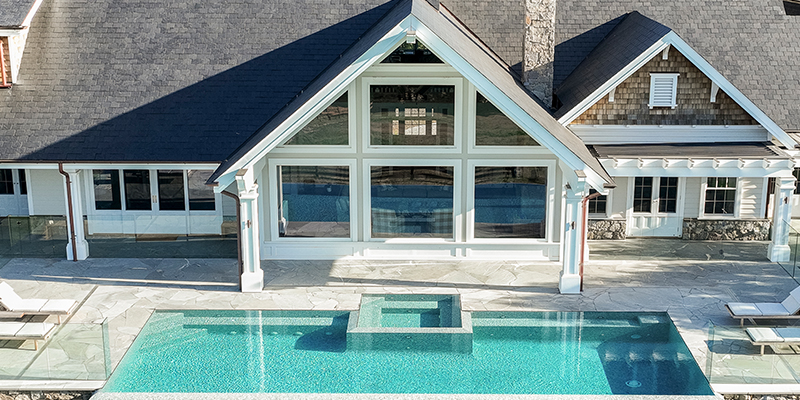
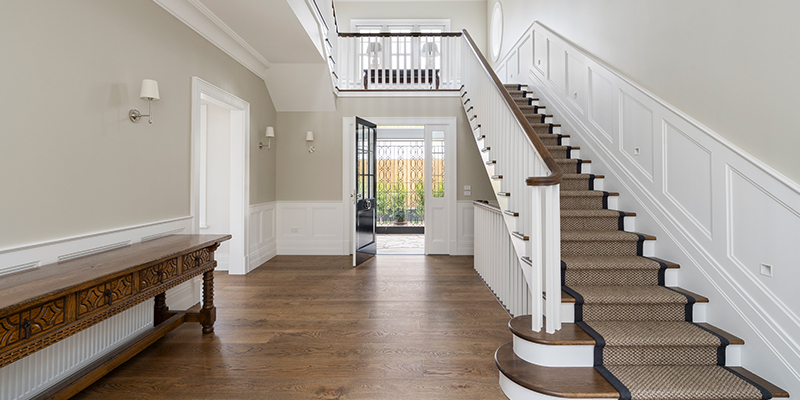
For Hemming and Nicoll, the challenge is exactly the point. Basements, high-spec architectural detailing, complex services integration, premium finishes, and demanding timelines are not deterrents; they are what make the work meaningful.
Scaling with Control, Not Chaos
Despite working in a premium segment, they are careful not to overextend operationally. The company typically runs four to five projects at a time, a deliberate choice that protects quality and ensures leadership remains close to delivery.
Their revenue trajectory reflects disciplined growth. Where a $1 million annual turnover once represented a solid year, the business has matured into the $8–$9 million range and is now chasing a strategic goal of $10 million annually—an outcome they believe is within reach this financial year.
But for them, revenue is not the purpose; it’s the measurement. It reflects the caliber of work being delivered and the operating structure required to support their team. Their projects can range widely—from smaller yet highly specified builds to large-scale residences valued in the multi-millions—so long as the design intent, client expectations, and quality bar align with their brand.
Signature Builds That Defined the Business
When discussing the projects that best represent their capability, both partners point to builds that were not only architecturally significant, but career-defining in terms of responsibility and risk.
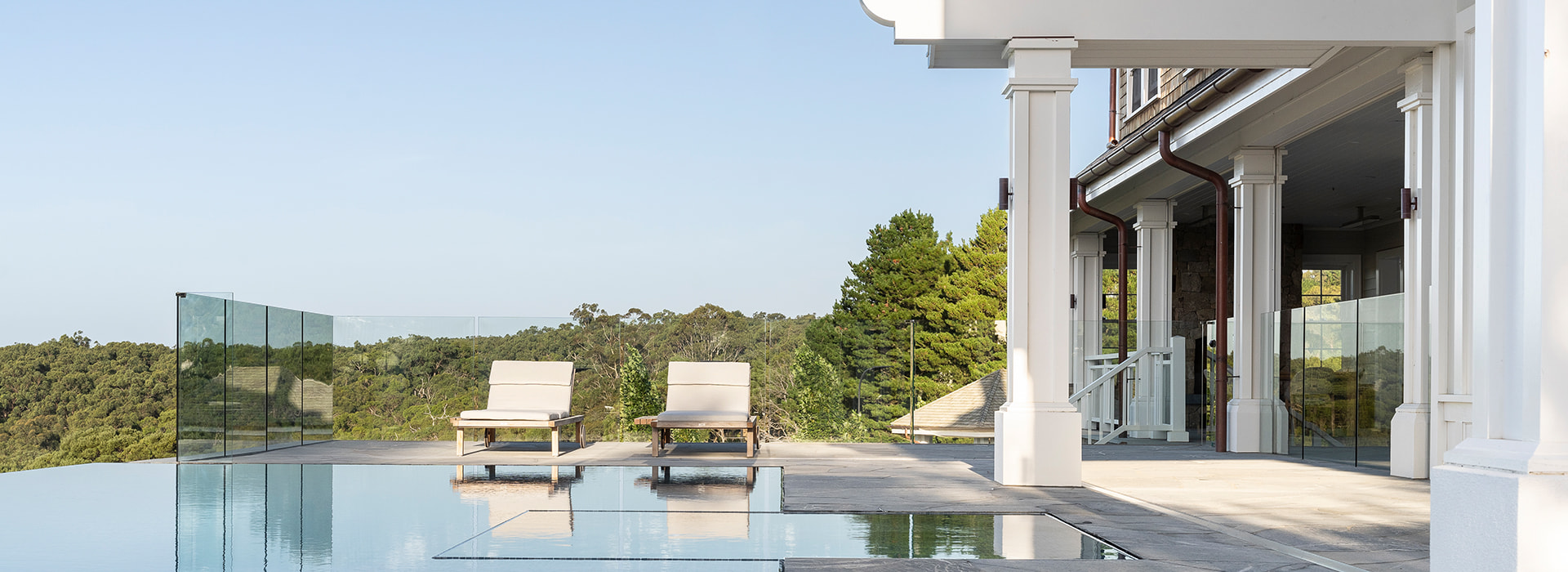
One such milestone was a major build in Beaconsfield—an enormous, complex home set on 15 acres, measuring roughly 1,300 square metres. While both builders had previously contributed to projects of this scale as carpenters, Beaconsfield marked the first time they delivered a build of that magnitude under their own license, managing every aspect end-to-end.
It was also built during the height of COVID disruption, amplifying the difficulty of delivering on time, securing materials, coordinating trades, and maintaining workforce continuity amid restrictions and volatility.
“That job was significant because it was the first one of this scale managed under our license,” Hemming explains. “We won that job, got a really good result, and proved we were capable.”
Nicoll agrees that Beaconsfield became the project they could “hang their hat on,” providing confidence to pursue—and win—larger projects moving forward. Since then, they’ve maintained a pipeline that consistently includes major builds, including a high-caliber project completed in Brighton and other premium residential work aligned with the same target market.
Their reflection on project costing also reinforces the reality of today’s construction environment. A build that landed around $7 million with variations in a recent period would likely sit closer to $8.5–$9 million in today’s market, given the magnitude of pricing shifts experienced since COVID.
Industry Shifts: Pricing Volatility, Technology, and Smart Homes
Like many builders across Australia, Hemming and Nicoll describe COVID as a turning point—not only in material costs and availability, but in client confidence and the structure of contracts.
Pricing volatility reshaped early conversations with clients. Where initial meetings were once predominantly about design vision and experience, they became heavily centred on cost escalation risk, supply uncertainty, and how contracts could be structured to protect both parties in a rapidly changing market.
Beyond cost, they see technology as one of the most decisive differentiators between builders who will keep pace and those who will fall behind. While some competitors remain anchored to “pen and paper,” they emphasize the importance of adopting systems and software that improve workflow, communication, and speed of decision-making.
They also see a future where AI-driven systems will further transform construction planning and delivery, creating new expectations around responsiveness, visibility, and project control.
On the product side, the homes they build are becoming increasingly integrated and technology-rich. Smart automation—motorized blinds, app-controlled lighting and heating, remote pool and spa systems, integrated connectivity, solar and battery systems, EV charging, and advanced mechanical services—has become part of the baseline expectation in high-end residential.
It is not uncommon, they note, for clients to invest hundreds of thousands of dollars in heating, cooling, and hydronic systems alone—an indicator of how far client expectations have moved beyond conventional residential standards.
A Team Built for Site Presence and Standards
While the company is carefully scaled, it is structured for constant oversight—because that is where quality is protected.
The team sits at approximately 10 people, including the founders. The business includes office support for bookkeeping and costing, a core carpentry workforce comprised of tradespeople and apprentices, and a senior project coordinator who supports site management and daily execution.
The emphasis is on presence. Leadership is consistently on-site, and when they are not, experienced supervision is. They believe this is one of the most important safeguards against the industry’s most common failure pattern: builders taking on too many projects too quickly, losing control, and watching delivery standards—and profitability—collapse.
For Hemming and Nicoll, slow and steady is not cautious; it is strategic. In a high-risk industry, maintaining control is an advantage.
The Strength of Subcontractor Relationships
A defining element of their delivery model is the supplier and subcontractor network they’ve built over years of consistent work. In their view, a successful building company is never just the people on payroll—it’s the broader ecosystem of trusted trades, vendors, and partners who contribute to the end product.
Electricians, plumbers, and specialist subcontractors are carefully selected, reused, and developed over time. Key supplier relationships with timber and building material providers also play a role in quality assurance, procurement efficiency, and problem-solving during high-pressure stages of a build.
These relationships also contribute to long-term scalability. While the business currently depends heavily on the founders’ daily involvement, one of their longer-term goals is to create greater “exit ability”—a structure where delivery can remain consistent even when Travis and Reece are not personally driving every decision.
They are realistic about the timeline. Building a truly self-sufficient company, they believe, can take a decade of deliberate leadership development, process refinement, and the right people in the right seats.
The Strategy Ahead: Stay in the Right Market and Keep Getting Better
When asked about the next two to five years, the answer remains consistent with their original ambition: keep building the best homes they can, for the right clients, with the right architects, and keep elevating standards.
Architect relationships are especially critical. While the homeowner signs the contract, Hemming and Nicoll describe architects as the engine of their business—referring aligned clients, driving design ambition, and shaping the type of projects that match the company’s brand.

Strengthening those alliances, expanding strategic relationships in the architectural space, and maintaining steady workflow are key priorities. Permitting timelines, start-date uncertainty, and construction sequencing remain ongoing challenges, and mastering workflow is viewed as one of the most difficult operational disciplines—because workflow directly impacts cash flow, staffing stability, and the ability to maintain quality without rushing.
In a market where interest rates and sentiment can swing quickly, they remain optimistic. Their view is that work still exists, particularly for builders who understand their positioning, define their target market clearly, and spend more energy pursuing the right opportunities than being dragged down by industry negativity.
“It’s taken us a long time to get to the point where we know what our market is,” they reflect.
“There is still work there—if you find the right market and stick to it.”
A Business Built on Standards and Long-Term Thinking
At its core, the Hemming– Nicoll story is not one of rapid expansion or chasing volume. It is a model built around clarity: clarity on the client, clarity on the product, clarity on the level of detail, and clarity on what it takes to deliver consistently in a high-end segment.
From two mates on the tools to licensed builders managing complex, premium homes across Victoria, their momentum has been driven by strong fundamentals—craftsmanship, project control, team development, and the discipline to grow without sacrificing what made them successful in the first place.
And if their track record so far is any indication, their goal of becoming known as one of Victoria’s leading high-end residential builders is not a distant ambition—it’s simply the next stage of a plan that has been in motion for years.
AT A GLANCE
Who: Hemming & Nicoll Constructions
What: A creative and top-tier home builder making homes built to last
Where: Victoria, Australia
Website: www.hemmingandnicoll.com
PREFERRED VENDORS/PARTNERS

Somerville Plaster – www.somervilleplaster.com.au
Auswide Plumbing & Civil, established in 2007, delivers high-performing civil and utilitiy infrastructure projects across Victoria. Trusted for safety, quality, and technical expertise, Auswide completes projects with a team of superstars for water authorities, road & rail major projects, private developers and government projects.
 This information will never be shared to third parties