
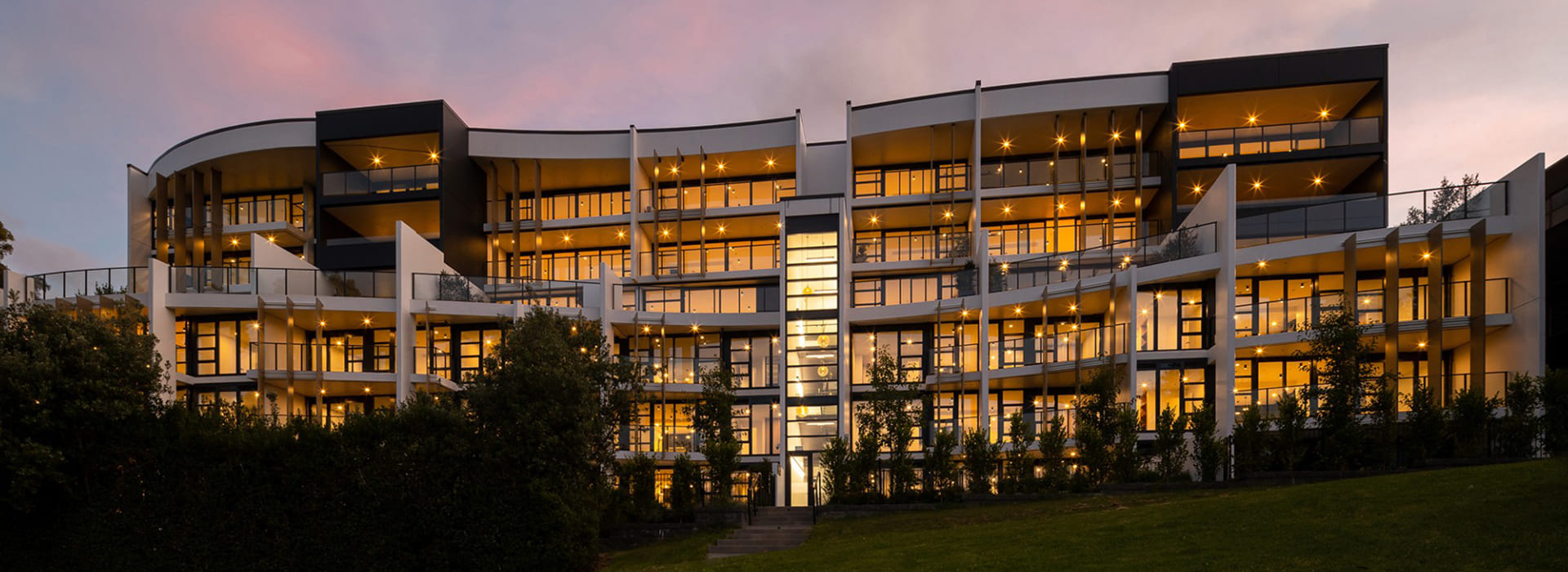
Designing with Context, Building with Purpose
A New Approach to Designing the Very Best Options
Founded in the aftermath of the Global Financial Crisis, Templeton Group emerged from a moment of economic reset with a clear conviction: property development could—and should—be approached differently. Established in 2014 and celebrating its tenth anniversary last year, this design builder’s foundation rests on the belief that thoughtful master planning, strong design leadership and long-term land stewardship could create developments that endure well beyond market cycles.
Led by Founder and Chairman Nigel McKenna, Templeton Group draws on decades of experience across residential, tourism, and mixed-use development, particularly in New Zealand. With a background that includes the development of eight hotels and extensive involvement in large-scale urban projects, McKenna has shaped Templeton into a diversified developer with a clear identity and a tightly held philosophy.
As he puts it, “With the exception of prisons, we’ll do anything with a bed in it.” That breadth has seen Templeton deliver projects across aged care, student accommodation, social and affordable housing, multigenerational living, standalone homes, townhouses, high-density residential, hotels, and tourism assets—always with an emphasis on quality, context, and design integrity.
Context as a First Principle
What most clearly sets Templeton Group apart is its uncompromising focus on context. Every project begins not at the site boundary, but well beyond it—often literally from the air. McKenna describes getting into a helicopter to understand where a site sits within its wider landscape, its relationship to surrounding communities, and its long-term potential.,
This approach is informed by a philosophy drawn from New Zealand’s Māori worldview, where land ownership is better understood as guardianship. Developers, in this view, are temporary custodians of land, responsible for leaving it better than they found it.
“That mindset changes everything,” McKenna explains. “You’re not just delivering a project. You’re shaping a place that will outlive you.”
This commitment to stewardship manifests in master planning that prioritizes integration, walkability, public realm activation, and long-term adaptability—whether in greenfield developments or complex brownfield urban sites.
Design as Both Discipline and Passion
The second defining pillar of Templeton Group is design. Architecture, interior design, landscape, and urban form are not outsourced considerations—they sit at the core of the company’s identity.
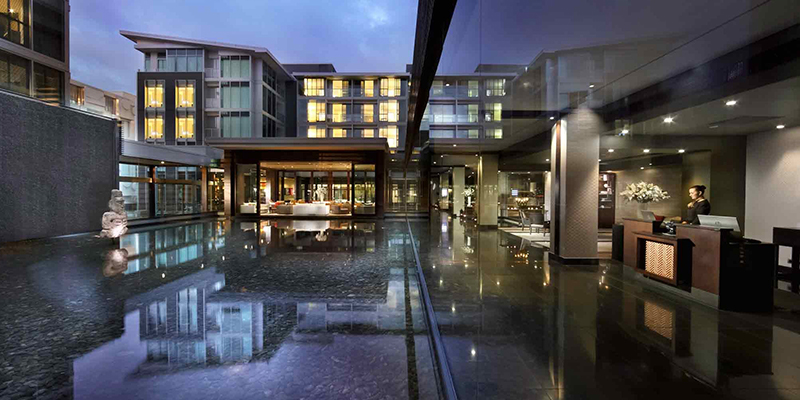
Design, McKenna says, is not only his profession but his passion. Internally, the philosophy is simple and non-negotiable: Templeton does not do ugly.
This ethos has driven Templeton’s involvement in some of New Zealand’s most influential urban developments. Among the most personally significant for McKenna is Beaumont Quarter, a high-density residential project completed more than 25 years ago. Built on just 2.4 hectares and delivering 256 homes without resorting to high-rise construction, the project achieved densities exceeding 100 units per hectare while maintaining a human-scale built form of three to four storeys.
At the time, Beaumont Quarter was groundbreaking in its emphasis on master planning, context, and integrated design. It went on to become a widely referenced case study and contributed to the formation of New Zealand’s urban design protocols—remaining highly regarded decades later.
Shaping Auckland’s Waterfront Legacy
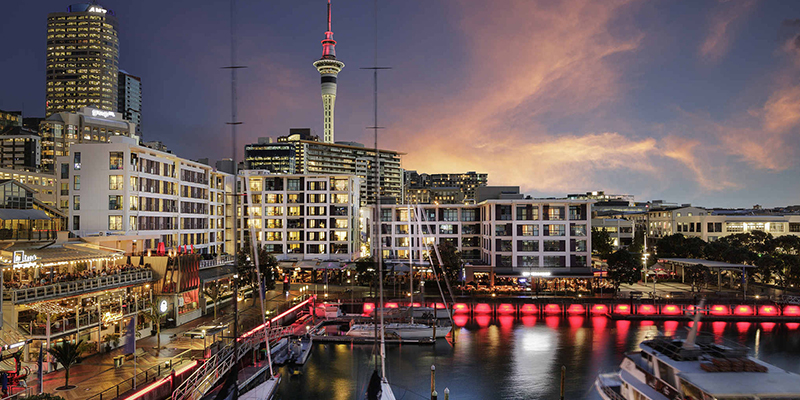
Perhaps the most visible expression of Templeton’s philosophy is McKenna’s extensive involvement in the master planning and residential development of Viaduct Harbour, Auckland’s iconic waterfront precinct.
Beyond delivering high-quality residential buildings, Templeton made a deliberate decision to activate the ground plane—opening buildings to the public realm rather than closing them off. Ground floors were given over to restaurants, bars, and retail, anchored by a raised public plaza and a vibrant food-and-beverage precinct that remains one of Auckland’s most visited destinations.
“That decision changed everything,” McKenna reflects. “People come to the Viaduct not just to live, but to experience it.”
Unlike some neighbouring developments that turned inward, Templeton’s approach created a lasting urban legacy—one measured not just in property value, but in public life, memory, and experience.
A Disciplined Approach to Site Selection
Templeton’s development pipeline is shaped as much by what it rejects as what it accepts. McKenna estimates that three to four sites cross his desk every day—yet more than 99 percent are immediately dismissed.
“There are plenty of ordinary sites,” he says. “But truly great sites are rare.”
Location, he stresses, is the one variable that can never be changed. Economic cycles fluctuate. Regulatory frameworks evolve. But geography is permanent.
That discipline recently led Templeton to acquire a highly unusual one-hectare waterfront site in Auckland, located just ten minutes from the CBD and five minutes from the beach. Zoned for a true mixed-use outcome—including an 18-storey tower, hotel, residential, and retail—the site is poised to become a landmark project.
Surrounded by water and offering uninterrupted views back toward the city skyline, the development embodies everything Templeton looks for: rarity, context, and long-term placemaking potential.
Navigating Regulation and Economic Cycles
Operating in New Zealand brings its own complexities. While Templeton is accustomed to economic cycles—McKenna likens events such as the GFC to a “tsunami” that can be prepared for but never avoided—regulatory complexity has been a more persistent challenge.
New Zealand’s planning framework is highly prescriptive, with more than 1,000 zoning classifications compared to Japan’s 12. Layered regulations around soil protection, freshwater management, slope limits, and seismic requirements significantly constrain development options.

Templeton’s response has been to assemble what McKenna describes as an orchestra—a multidisciplinary team of specialists, each with deep expertise in navigating a particular aspect of planning, engineering, design, construction, or compliance.
The head office is deliberately kept lean, at around 30 people, inspired by the Berkshire Hathaway philosophy of minimal bureaucracy. Across Templeton’s wider operations, however, hundreds of people are employed in hotels, vineyards, construction sites, restaurants, spas, and tourism assets—each division empowered to operate with autonomy and expertise.
Innovation, Affordability, and Sustainability
Globally, Templeton sees two forces shaping the future of property development: housing affordability and environmental responsibility.
Affordability remains one of the most difficult challenges, particularly in a high-seismic environment like New Zealand, where construction standards rival those of Japan and California. While modular and prefabricated solutions have transformed housing markets elsewhere, seismic constraints make many of these approaches difficult to implement locally.
Instead, Templeton focuses on innovation through design efficiency, smart planning, material choices, and long-term adaptability. Timber construction—abundant and sustainable in New Zealand—plays a significant role, as do green building frameworks such as Homestar ratings, which measure environmental performance.
Sustainability, McKenna notes, is no longer optional. Younger generations expect it. While buyers may not yet pay a premium for green features, they increasingly demand transparency and responsibility in how developments are delivered.
Looking Ahead: Tourism, Wellness, and Longevity
As Templeton maps its next five to ten years, one sector is rising decisively to the forefront: tourism and health-and-wellness development.
McKenna believes New Zealand is a premium global destination—defined by air quality, natural beauty, and lifestyle rather than industrial scale. With deep experience in hotels and hospitality, Templeton is now investing heavily in world-class wellness destinations that integrate accommodation, preventative healthcare, and immersive natural settings.
Two major wellness projects are currently in development. One will sit within a large Central Otago vineyard, incorporating a luxury lodge and a 4,000-square-metre wellness centre based on vinotherapy, hydrotherapy, saunas, steam rooms, cold plunges, hyperbaric chambers, and advanced recovery treatments. Another is planned north of Auckland, nestled within covenanted native bushland featuring centuries-old trees and near-total acoustic isolation from roads.
“These are places for people to slow down,” McKenna explains. “Not detox—but purification. Time to reconnect with themselves.”
Wellness, he believes, is the fastest-growing sector in global property and hospitality, reflecting a broader shift toward longevity, preventative healthcare, and quality of life.
A Legacy Beyond Buildings
For McKenna, legacy is not defined by scale, but by endurance. Restaurants he developed in the early 1990s in Wellington still trade successfully today. Waterfront precincts he helped shape more than two decades ago remain vibrant. Residential buildings continue to house people who see no reason to leave.
Yet the legacy he speaks about most passionately is experiential. Hotels, restaurants, wellness centres, and public spaces allow people to participate in places—to form memories, relationships, and emotional connections.
“I can’t show you someone’s apartment,” he says. “But I can invite you into a hotel, a restaurant, a spa—and that’s where people connect.”
In that sense, Templeton Group’s work is about more than property. It is about place-making with intention, designing environments that respect land, serve communities, adapt over time, and contribute meaningfully to the social and cultural fabric around them.
As Templeton enters its next decade, that commitment—to context, design, wellness, and stewardship—continues to define not just what the company builds, but why it builds at all.
Click The Cover To View Or Download The Brochure
AT A GLANCE
Who: Templeton Group
What: A leading New Zealand based property developer bringing a revamped design approach to leading projects
Where: Auckland, New Zealand
Website: www.templetongroup.co.nz
PREFERRED VENDORS/PARTNERS

Templeton Group – www.templetongroup.co.nz
Founded in 2014 and led by award-winning developer Nigel McKenna, Templeton Group is a New Zealand property developer known for pioneering genuine master-planned communities. With over $5 billion in delivered developments spanning residential, hospitality, student accommodation, and wellness projects, the company emphasizes context-driven design, environmental stewardship, and creating places that enrich lives for generations.
 This information will never be shared to third parties